NORTHCREST ENERGY & REAL ESTATE INC.
NORTHCRESTENERGY & REAL ESTATE INC.

ENERGY & REAL ESTATE WITH VISION

Energy for tomorrow.
Value that lasts.

Energy and real estate shape our future. We consider both together, with a focus on substance and a long-term perspective.

ENERGYREAL ESTATE
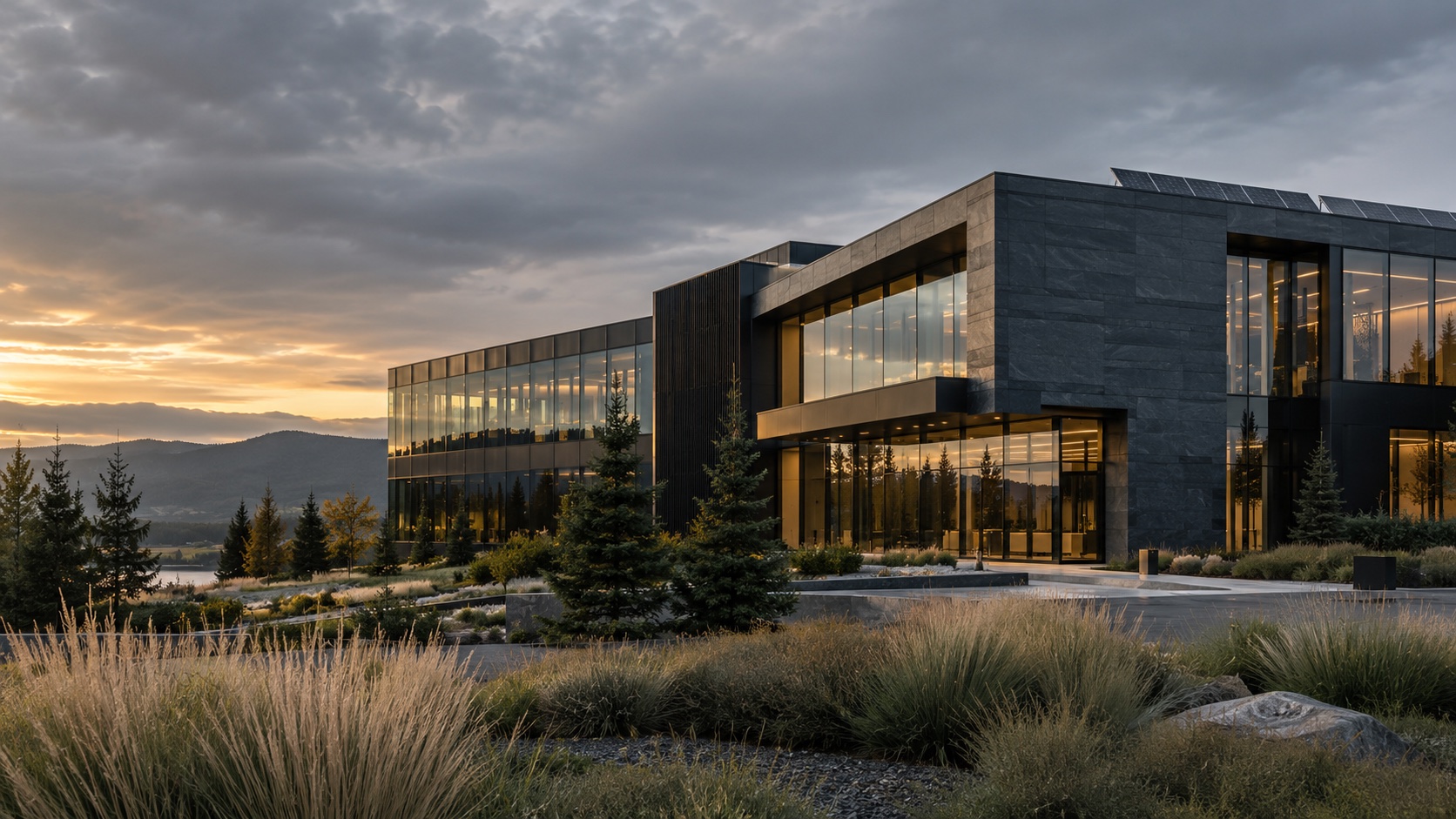
Architectural concept: a modern building with rooftop solar panels in a green landscape
A perspective on tomorrow.Conceptual architectural visualisation
Energy & real estateLong-term perspectivesThinking holistically

Two sectors.
One shared horizon.

The name Northcrest Energy & Real Estate Inc. brings together two essential themes: tomorrow’s energy supply and the spaces in which we live and work.

Our guiding idea: real estate and energy are stronger together. That is why we see buildings, their use and energy as parts of a whole.

Substance meets the future.

Two perspectives on long-term development.

ENERGY01

Rethinking energy.

How energy is generated, used and integrated with buildings determines its long-term viability. These connections are central to our perspective.

Renewable energyEfficiencyIntegration
Our perspective
From a location’s energy needs to the potential of renewable sources, a holistic view considers generation, consumption and long-term use together.
REAL ESTATE02

Spaces with a future.

Real estate is more than buildings. Its value comes from the interplay of location, quality, use and the ability to evolve with changing requirements.

Location qualityUsePreserving value
Our perspective
A long-term view connects a building’s substance with what a location can offer in the future. That includes well-designed spaces and a considered approach to energy and resources.

Digital performance needs a strong foundation.

Data centres connect real estate with critical energy and IT infrastructure. Our focus is on locations where power, connectivity, cooling and a viable use concept fit together, from regional data centres to sites for cloud and AI applications.

01

Location & grid connection

A suitable plot alone is not enough. Available connection capacity, firm grid-operator timelines, fibre connectivity, planning requirements and room for expansion are essential. These conditions form the basis for further project assessment.

02

Power & availability

Load profiles, redundancy and maintainability must suit the intended operation. Grid supply, uninterruptible power supply and, where appropriate, backup generation are planned as a coordinated system. Availability targets depend on operator requirements and a specific technical design.

03

Cooling & high power densities

Cloud and AI applications can have different power-density requirements. Air or liquid cooling, heat rejection and water demand must be assessed for each location. IT equipment, climate and the operating concept need to work together.

04

Efficiency & heat reuse

Energy efficiency is assessed using measurable operating data. Power usage effectiveness, or PUE, compares total facility energy use with IT energy use. Heat reuse requires suitable temperatures, proximity and an appropriate heat consumer, among other factors.

05

Property & operating model

Layout, structural capacity, security, access and utility infrastructure must be aligned with future use early on. Phased development can help match construction to actual demand. Operator requirements and contractual responsibilities need to be clarified in advance.

06

Assessment & delivery

A sound project basis includes site control, technical feasibility, permits, costs and operations. These inform the project structure and a realistic schedule. Specific capacities and certifications are assessed separately for each project.

Make energy available. Create flexibility.

Battery storage can separate the timing of generation and consumption. Northcrest therefore considers storage alongside grid connections, property and energy users, with a focus on commercial applications, energy projects and data-centre infrastructure.

01

Applications & operating strategy

Potential uses include shifting electricity purchases, reducing demand peaks, integrating renewable generation and suitable grid services. The right combination depends on location, market rules and the actual load profile.

02

Power, capacity & duration

Power in MW describes how quickly energy can be delivered; capacity in MWh describes the amount of energy. Their ratio determines the theoretical discharge duration. Usable capacity, efficiency, operating reserves and ageing must be included in the actual design.

03

Grid connection & control

Connection requirements, transformers, power electronics, metering and protection form one system. Energy management coordinates charging and discharging within technical limits. Storage does not replace a grid-connection agreement or add capacity to the grid itself.

04

Safety & permits

A site-specific safety concept considers battery technology, thermal monitoring, separation distances, fire incidents and access. Specialist designers, authorities and emergency services should be involved early. Requirements vary by project and jurisdiction.

05

Whole-life economics

Beyond equipment and construction, the assessment includes operations, maintenance, energy losses, ageing and potential component replacement. Revenue assumptions must reflect realistic use and contract terms. Storage size alone does not establish a particular saving or return.

06

Integration with data centres

Storage can form part of a coordinated energy concept. Load-management use must be aligned with availability requirements and reserve needs. A standard battery system is not automatically an uninterruptible power supply or suitable for islanded operation.

One location. Multiple systems. A considered design.

  1. 01

    Property

    Site, location, use

  2. 02

    Energy

    Connection, generation, supply

  3. 03

    Storage

    Flexibility and operating reserves

  4. 04

    Data centre

    IT, cooling and operations

Connecting these areas is a project approach. Technical suitability, permits, financing and operator requirements are established for each individual project.

What helps a project get started?

An initial project profile should include location and site size, ownership or usage rights, grid-connection status, required power, intended use and timing. Storage projects also need load profiles and an operating strategy; data centres need IT load, a cooling concept and operator requirements.

Technical background

See the whole picture.
Think further.

A clear view of what matters today and what should endure tomorrow.

01

Think long term

Base decisions on lasting usability and sound long-term perspectives.

02

Understand the connections

Consider energy, location and real estate together and account for how they influence one another.

03

Put substance first

Treat quality, resources and economic viability as interconnected responsibilities.

Northcrest Energy
& Real Estate Inc.

Northcrest Energy & Real Estate Inc. was incorporated in Wyoming on 28 September 2026. The company focuses on holding and managing its own assets and interests in energy and real estate businesses and their projects.

Wyoming business register
Legal form & registration
Wyoming Profit Corporation
Filing ID: 2026-002093162
Incorporation
2026-09-28
US contact address · Virtual office
30 N Gould St, Suite #43489
Sheridan, WY 82801, USA
Contact person
Steffen Fräbel

1,000,000,000 USD

Common shares with a par value of USD 1 each

The authorised aggregate par value describes the corporate share framework. It does not indicate paid-in capital, existing assets or the company’s value.

Your project. A shared starting point.

Would you like to introduce a site, data-centre, storage or property project? Send us a short description and its current development status.

Discuss a project by email
Steffen Fräbelinfo@territorium-invest.de+1 307 205-746730 N Gould St, Suite #43489
Sheridan, WY 82801, USA
US contact address · Virtual office